Showing posts with label for. Show all posts

Wednesday, April 30, 2014

Home remedies for kidney stones


Usually, people with kidney stones experience sharp, sudden pain in the left or right flank or back. However you can reduce symptoms by using some natural home remedies
Kidney stones
The kidneys are one of the most important organs in the human body. The kidneys help to detox and filter impurities from the blood, as well as waste products from your urine. Kidney stones form when the kidneys are not able to process toxins efficiently. Specifically, a crystallization of unprocessed minerals builds up.

Unhealthy food intake is a primary cause of kidney stones. Cut down on the amount of soda and energy drinks you consume. Avoid processed foods and alcoholic beverages. Add more fruits and veggies to your diet. Other common Causes of Kidney stones include

  • Urinary tract infection (UTI)
  • Overdoses of Vitamin D
  • Mineral imbalance
  • Kidney disease
  • Dehydration
  • Gout
Most of the cases of kidney stones can be treated successfully with the help of natural ingredients. These natural treatments are safe and effective and at the same time they do not have any side effects.


Natural home remedies for kidney stones

1) Drink plenty of water
Increasing your fluid intake should be your first step (and may be the only step needed) toward staying free of kidney stones. Six to eight 8-ounce glasses is the minimum amount you should drink every day. Thus, the color of your urine will become clear like water which is a good sign. It is recommended to drink mineral water as it is free of sediments. Mineral water will help in reducing the concentrations of calcium and uric acid from the urine, thus making it less alkaline in nature. At the same time mineral water will not allow the kidney stone to increase in size.

2) Lemon juice remedy
This is one of the most effective remedies for kidney stones and the pain they cause. At the first symptom of stone pain, mix 2 oz of organic olive oil with 2 oz of organic lemon juice. Drink it straight and follow with a 12 ounce glass of purified water. Wait 30 minutes. Then, squeeze the juice of 1/2 lemon into 12 ounces of purified water, add 1 tablespoon of organic raw apple cider vinegar and drink. Repeat the lemon juice, water and apple cider vinegar recipe every hour until symptoms improve.

3) Kidney beans
Take 60 gm kidney beans, add 4 L of water, heat for 4-5 hr Strain the liquid through a fine muslin cloth, allow the liquid to cool, drink 1 glass of this liquid once every 2 hr in a day, do this for a week, do not use the liquid or the beans again 24 hr after the 1st preparation.

 4) Dandelion root tea
Organic dandelion root is a great kidney tonic and cleanser. Taking up to 500 mg twice a day may be beneficial. You can also drink dandelion root tea.

5) Nettle leaf 
The nettle leaf helps in maintaining the flow of water through the kidneys and bladder, thus promoting smooth urination. It also prevents the crystals from forming into stones and keeps the bacteria away. You must drink two to three cups of nettle tea daily. To make this herbal tea, take two tablespoons of dried nettle leaf and add it to a cup of hot water. Steep for ten minutes and then strain it before drinking the tea. Nettle tea will also enhance the benefits of water by acting as natural diuretics. 


6) Whole wheat bread
A couple slices of whole-wheat bread contain a good amount of magnesium, a mineral known for averting stones. One study found that people who got an adequate amount of magnesium stopped getting kidney stones altogether.

7) Basil Leaves
The basil is regarded as a tonic for the kidneys and thus it is good for the overall health of kidneys. Those suffering from kidney stones must take one teaspoon of basil juice and mix it with equal amount of honey and have it daily in the morning for five to six months. or Basil tea can be taken throughout the day for overall kidney health. If you have kidney stones, try taking one teaspoon each of basil juice with raw honey daily for up to six months. It’s believed that folk remedies with pure basil juice can help induce stone expulsion from the urinary tract.

8) Pomegranate
The seeds and juice of pomegranates can be considered another natural remedy for kidney stones. This may be related to their sourness and astringent properties. You may eat organic pomegranates or drink freshly-squeezed pomegranate juice. In other way you can take one tablespoon of pomegranate seeds and then grind it to make a fine paste. Now take this paste along with a cup of horse gram soup once daily. This remedy will help in dissolving the gravel in kidneys.

9) Chicken
The B vitamins, specifically vitamin B6, are well-known stone fighters. Vitamin B6 keeps the body from building up excess oxalate. Too much oxalate is a major factor in kidney stone formation. Three ounces of chicken provide more than one-third of your daily needs.

10) Celery Juice
Celery in vegetable form and celery seed are great urine-promoters and kidney tonics. Regular use of celery seed, as a spice or as a tea, may prevent kidney stone formation. A glass of raw celery juice can help in getting relief from the pain due to its antiseptic properties. Celery juice helps in clearing the toxins that causes the formation of kidney stones. At the same time raw celery juice is a diuretic, which means it can help the stone to break down. 

11) Water melon
Water melon contains potassium which helps in regulating and maintaining the level of acid present in urine. Along with potassium, watermelon also contains highest concentration of water which helps in flushing out stones from the kidneys. Regular consumption of water melon can help a lot in the treatment as well as prevention of kidney stones


12) figs
Boil two figs in a cup of water. Drink this first thing in the morning for one month.

Kidney stones are one of the most painful disorders that affect humans. The pain from a kidney stone can often be sudden, sharp, and unbearable. For some people, the pain is as excruciating as giving birth. For others, the pain is terrible, but is more tolerable. 

So here are some preventive steps for you to keep that pain at bay......

Prevention

Drink more fluids. You need to drink at least 1 1/2 to 2 quarts of fluid a day to dilute your urine to discourage stone formation. If your tap water has a high mineral content (i.e., you have hard water), drink bottled water or filter the tap water. Some of the liquid can be in the form of diluted juices, especially cranberry juice, lemonade, orange juice, or weak tea, all of which help make your urine more acidic. If you can find it, try black currant juice. Stay away from grapefruit juice, however; there’s some evidence it might increase your risk of stones. And stop drinking sodas. The phosphoric acid in carbonated drinks can increase your risk of stones.

Eat more fruits and vegetables. They’re a great source of a nutrient called phytate, and one major study from Harvard found that the more phytate in women’s diets, the fewer kidney stones they developed. However, avoid foods high in oxalates such as spinach and other dark greens, rhubarb, and beets.

Consume more dietary calcium. It sounds counterintuitive, but the more calcium you eat, the less oxalic acid you absorb from food and the less likely you are to develop stones.

Limit salt and sugar, which increase the amount of oxalic acid your body absorbs.
Get 10 to 15 grams of wheat bran (about 1/2 ounce) a day. It decreases the risk of additional stones in people who have already had a calcium oxalate stone.

Lose weight. Being overweight significantly increases your risk of stones.

Wednesday, April 16, 2014

10 Benefits of magical strawberry for health

10 Benefits of magical strawberry for health - Who does not know the strawberry? Cute pieces that look beautiful and make saliva dripping. Although small, this fruit is called as Queen of fruits you know! The reason is because strawberries contain many nutrients and health benefits.

What are the benefits of magic strawberries for health? Heres the list, as reported by Best Health.

1. Boost immunity

Strawberry is the best source of vitamin C. Two bowls of strawberries a day alone can satisfy the bodys vitamin C requirement. Vitamin C is known as an immune system enhancer and antioxidant good for fighting disease. Plus, the antioxidants in strawberry fruit is different from others because the antioxidants work more quickly and be ready in the bloodstream.

2. Maintaining eye health

Antioxidants in strawberries are also effective to prevent cataracts can lead to blindness in old age. Eyes need vitamin C to keep them from free radical sun. In addition, strawberries can also strengthen the cornea and the retina of the eye. Although the study never reveal that excess vitamin C actually increase the risk of cataracts in the elderly, but this does not apply vitamin C in strawberry bag.

3. Ward off cancer
Antioxidants in strawberries also help prevent cancer. Chemical called ellagic acid found in strawberries is erred to as an anti-cancer agent that can suppress the growth of cancer cells. In addition, other antioxidants such as lutein and zeathancins can also ward off free radicals and protect the health of the cell.

4. Preventing wrinkles
Not only good for your health, strawberries are also good for skin health. indirectly, strawberries also make you more beautiful. This fruit helps improve the elasticity of the skin so that it can prevent the appearance of wrinkles and make you look younger. Ellagic acid in strawberries can protect the collagen in mind that is not easily damaged and prevents inflammation of the skin.

5. Fight bad cholesterol

Based on the Heart and Stroke Foundation, heart disease is one of the most deadly diseases for women. Fortunately strawberries also contain substances that can improve heart health and lowering cholesterol. In addition, strawberry also prevent inflammation which indirectly also protect the heart. To that end, strawberries fit for consumption and included in the diet if you have problems with cholesterol.

6. Reducing inflammation

Antioxidants and chemical found in strawberries may reduce inflammation in the joints that can lead to arthritis and can lead to heart disease. A study at the Harvard School of Public Health showed that women who ate at least 16 strawberries per week had a 14 percent lower likelihood becomes inflamed.

7. Keeping blood pressure

Potassium in strawberries are known to maintain blood pressure levels, and even lower high blood pressure. If you have a problem with high blood pressure, there is no harm in eating strawberries regularly. One bowl of strawberry can contain 134 milligrams of potassium to keep blood pressure.

8. Digestion

Strawberry also contains fiber which is good for smooth digestion. Strawberry contains at least two grams of fiber per dose. Eating strawberries can prevent constipation and inflammation of the intestine. In addition, as well as the strawberry can also prevent type 2 diabetes because it slows the digestive process and absorption of sugar in the blood.

9. Keeping weight

m Trying to keep the weight off? Strawberry can be your best friend. Strawberry has a fairly low calories, no fat, sodium or sugar. Carbohydrates contained in it even only half a loaf of bread. Nothing wrong with inserting a strawberry in a part of your diet.

10. Maintaining health during pregnancy

Folate and B vitamins are recommended for women who are pregnant or give birth. Strawberry contains lots of folate and B vitamins that can help you. This substance is very good for babys brain development and skull early in pregnancy. In addition, folic acid in strawberries are also good for preventing birth defects.

That many wonders of strawberry for health. Nothing wrong with this fruit is called as one of the healthiest fruit because of the many benefits contained therein. So, do not hesitate to eat strawberries on a regular basis.

Sunday, March 9, 2014

It is Visible if You are Looking for It!!

A lot has happened since I last posted. I visited my doctor and she was very pleased with the progress I have made. Ive been watching episodes of the TV series called "Heavy" on Netflix and getting ideas. I can feel my body getting stronger and I want to begin to push it a little more, but I also want to follow my physical therapists parameters. And Ive had my eyes opened with a new chart that I made.


Since I dont have cable-TV anymore I am not "up" on what is current in that scene, but I found the TV series called "Heavy" about obese people who go to a facility for thirty days to be rebooted. I have watched all of the Texas episodes and then the episode where they revisited the Texas people about six months later to see how they are doing. It seems to me that the camera eye view is almost totally focused on the exercise, with only a small percentage of attention on the food -- yet the affects of eating wrong show up instantly in weight gain for the participants. This view point is totally the opposite of my own focus.... so far. (It is easier to film actions like exercise, than it is to document people eating salad. LOL)


They seem to be on about a 1200 calorie a day diet of protein (fish) and vegetables (salad plus a few green beans) from what I can see. They do not go into the details of the food. But they sure go into the details of the exercise experience. At first as I watched I wondered about the people. I wondered why so many were crying and complaining. I wondered why this was so hard for them. Then it began to dawn on me that they are going through huge withdrawals and are initially under a lot of stress.


They are having carbohydrate withdrawals, family and friend withdrawals, and are also being forced to use their unfit pain wracked bodies in ways they never would have (or could have) done on their own. They are in a completely unfamiliar environment and suddenly every bit of bad behavior that they have depended on in the past to get them out of "bad situations" comes out to play. After the first week, though, things usually begin to settle down some, and their eyes begin to open up to the new possibilities for their lives. I think it is awesome and extremely tough to do. My hat is off to these many successful participants who put their lives on the air for us to observe... and to learn from. From what I have seen, nearly all of them are successful -- not absolutely all.


One thing I noticed is that even with their success they often still look like obese people when they are done -- but they have changed. If you were to meet them on the street and know nothing about them, you might only see that they are obese, but a few of them lost nearly a hundred pounds -- that gives you an idea of where they started. One man who weighed over four hundred pounds when he started had ankles that were nearly purple with lack of circulation. One of his legs had a "weeping" wound which is a spot where the skin has simply opened up and liquid seeps out, so he was not allowed to go in the pool until he got his doctors OK.


Later on, it shows where he has lost at least a hundred pounds (I dont recall the exact specifics) and looks a lot smaller and younger and happier.... but his legs still look purple. Another man had a "lymphodema" surgically removed and he is able to walk a lot better. I guess the reason that these physical conditions have stuck in my mind is because in my journey I wanted to reverse my pre-diabetic state which, technically, happened, but I am not without the disease, yet, and if I falter it will come back like a raging lion. I think the participants were brave and the trainers are awesome.


Ive been thinking about what my "weight loss goal" should be. The thought of choosing a number makes me a little crazy and does not work for me as a "goal." I cannot simply use "lose weight" as a goal either. I have tripped myself up in the past with that one. Once I lost a few pounds the goal would be met and I would wander off in another direction. I am comfortable with "continuing to lose weight." I feel able to continue (with the Lords help) on the path and not wander off. One of the ladies in the TV series said something about "perseverance and grace." and that has really struck me as being motivational for me. Id like to have those two in front of my face for a while to remind me, and help me stay on track. With my perseverance and Gods grace I shall continue to lose weight.


I also want to speed it up a little so Im beginning to focus on the exercise. Ive made up an activities chart for me to keep track of my daily activities. My physical therapist has told me that I can do "three minutes" of one exercise and then in a little while do "five minutes" of another one and continue doing this throughout the day. That way I dont have one gargantuan block of exercise to do all at once -- which can be completely overwhelming to me. Im more likely to simply sidestep the issue if it looks too hard (overwhelming) for me, but I can do a few minutes here and there, repeatedly throughout the day. Which is the reason for the chart.


Today was day one, and at the end of the day, I had not done any exercise. I would not have noticed that except that the chart has made me aware of the truth. So on day one, I noticed what I was not doing. For tomorrow I want to have some check marks under a few activities that I have done so I shall start earlier in the day to do a few of the "little minutes of activity." They are important and I need to incorporate them into my daily life. I shall begin the exercise again, in the morning.


I shared what I have been doing with a friend and she wants copies of my charts. I am pleased that she likes them and wants them... but Ive got enough experience to know that she may or may not actually use them. Ive tried to help people in the past with things they said they wanted, but many (I believe, most) people are not willing to actually adapt it to their own lives. I did the same things for years. Ive bought many pieces of "weight loss" equipment, but they dont do a thing for the body that does not get on them. In my defense I must say that the equipment is not actually made for people who are completely unfit and outrageously obese -- or, at least, that is what I thought. My physical therapist has taught me to pay attention to the fingers poking into my body (points of pain) and to make adjustments for them. Change something to stop the irritation but keep going. She says that to make improvements I need to get tired, but irritation only makes things worse.


One of the things the successful participants of "Heavy" have mentioned a few times is how much more agile they are now. Id love to have some of my former agility back. I can see it happening with the PT that I have been doing. If I persevere and depend on Gods grace, my agility, balance, and strength will improve. I wont be twenty-two again, but I can improve. Id like to improve and see where I might go with it. With my perseverance and Gods grace I shall continue to lose weight and increase agility and strength.


Ill be checking up on me with my chart, so Id better be alert and get active! Dont laugh... I think it might work!!


Be back soon,

Marcia


Tuesday, February 25, 2014

Spicy Herbed Breadsticks My Guestpost for Sangeetha

Doing guest post to a co-blogger is quite interesting, recently i got a message from Sangeetha of Recipe Excavator asking whether i can do a guest post for her. Who will say no to this great opportunity, immediately we chitchat through mail and she kindly asked me to make something baked for her with stepwise pictures. She was asking me from a long why am not posting stepwise pictures, as most of you know i have almost more than 2000posts in my space, coz of this space contraint i couldnt post stepwise pictures.

I truly used this opportunity to make a stepwise pictures of my guest post for Sangeetha. Initially i want to make some cake but finally i decided to make this excellent,super delicious spicy herbed breadsticks,they came out pect. She was quite happy for getting her requested stepwise pictures from me and this breadsticks i prepared for specially for her.


2cups All purpose flour
1cup Whole wheat flour
1tbsp Active dry yeast
1tsp Sugar
1tsp Salt
1/2cup Luke warm milk
2tbsp Olive oil
2tbsp Coriander leaves (chopped)
1tsp Red chillyflakes
1/2tsp Dry Oregano
1/2tsp Dry Thymn leaves
1tbsp Butter (room temperature)

Add the yeast,sugar and salt to the luke warm water and keep aside until the yeast turns foamy.

Take the flours in a bowl with chopped coriander leaves,red chilly flakes,dry oregano and dry thymn leaves,add gradually the foamy yeast,olive oil and water.

Knead as a soft and smooth dough,cover the bowl and keep the dough in a warm place for two hours..

Once they doubled their size,punch down the dough,dust the dough with flour and roll them as a medium size long rope like strips.

Arrange the rolled breadsticks over a baking sheet lined over the baking tray.

Preheat the oven to 350F.

Arrange the baking pan in middle rack of the oven and bake for 25-30minutes until the crust of the bread stick turns golden brown.

Brush immediately the bread sticks with the butter.

Serve warm with a bowl of soup.

Monday, February 24, 2014

Why Grains ARE Important For Most People

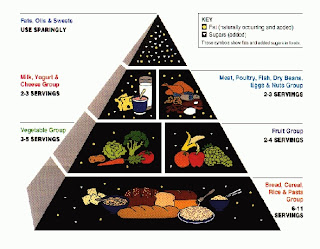
Its been a while since Ive talked about grains. Like over a year. Too long. Ive written Why You Dont Need Grains, about why you dont need grains. Duh. And Whole Grain Destruction, providing some hard science on the pitfalls of whole grains. Oh, and then there was Modern Wheat, explaining the difference between the wheat of the past and the wheat we eat today. Despite the nutritional shortcomings discussed in these articles though, most nutritionists still recommend a grain-based diet like the one depicted in this here food pyramid. Yes, its outdated, weve moved on to the Plate now. The philosophy is still the same.

As a nutrition professional, I think its important to talk to other nutrition professionals and understand their views on things, as they often differ from mine. Sometimes you learn something new from considering someone elses perspective.

I can remember one situation when I was doing my counseling internship at Student Health Services at UConn. I was shadowing a dietitian there, and a client that day mentioned that she didnt eat bread; she had heard we didnt need it in our diets to be healthy. Being the intern, I kept my mouth shut and let the counselor handle it. Of course, her advice was that we DO need bread, as it provides important vitamins and minerals. She may have had a point; ined flour products like white bread are enriched and fortified with B-vitamins (thiamin, riboflavin, and niacin), folic acid, and sometimes iron. For people who havent eaten vegetables or red meat in six months, maybe ined grain products actually serve a purpose.

So I started thinking... I wonder what it takes to get enough of these nutrients without grains?

B-Vitamins
This section will be short. If youre eating enough calories, its pretty difficult to be deficient in any of these vitamins. In fact, the only realistic way we would see a deficiency is if were getting most of our calories from ined grains that were not enriched; all of the ined grains in America are enriched. B-vitamins are found in meat, eggs, potatoes, sweet potatoes, veggies, fruits, nuts... pretty much all whole foods. I mean youd have to really be eating straight sugar or butter all day to not get enough of these. Theyre a non-issue. Next!

Folate
I say folate, not folic acid, because folate is the natural form found in food. Folic acid is the form added to foods (like grains) and used in supplements. This folate stuff is pretty darn important... its needed for several reactions involving DNA, which is the foundation for every cell in the body. Its also been found to be extra important in pregnancy; adequate folic acid levels can prevent the birth defect spina bifida.

Most of the food sources of folate are plant foods, with liver being the exception. Too bad liver is disgusting. I wish I could choke it down, I really do! Anyway, some of the best sources are greens and beans. Nice, that rhymed.

What does a full day of folate look like for a non-pregnant person? Glad you asked, here are a few examples:
  • 1/2 cup steamed spinach, 1/2 cup steamed collard greens, 1/2 cup kidney beans, 1/2 cup green peas
  • 1/2 cup lentils, 1 cup raw spinach, 1/2 cup asparagus, 1 small orange
  • 1/2 cup black beans, 1 cup steamed broccoli, 1 cup romaine lettuce, 1/2 cup Brussels sprouts
  • 6 oz. beef liver (Yuck.)
Some folate may be lost in cooking as well, depending on how long its cooked, so theres that to worry about too. 

You can get to the RDA for folate, sure. But is your average schmo doing this? No. Good thing those cheap grains are fortified with folic acid. And this doesnt even take into account a pregnant womans requirements, which are 50% higher. :-o 

Iron
This stuff.
First, its important to note that men and women have completely different iron requirements. According to the RDA, men only need 8 mg/day, while women need 18 mg/day. Premenopausal women, that is... losing all that blood every month has its consequences. After menopause, iron requirements for women drop back down to 8. Men should never have an issue getting enough iron. Women, on the other hand, have a little more trouble; girlies have a 6-10x increased risk of developing iron-deficiency anemia! (1)

The best sources of iron are animal foods. Clams, oysters, and liver are your most iron-rich foods. Red meat and poultry are second. And then weve got some random plant foods like pumpkin seeds, white beans, and lentils that sport nice iron profiles. Plant iron is less bioavailable than the animal type though, so the hard numbers are a little misleading.

The following are realistic ways to get 18 mg of iron in your day:
  • 2 cups kale, 1 cup steamed broccoli, 1 oz cashews, 1 cup edamame, 1/2 cup lentils, 1 medium baked potato, 4 oz boneless chicken breast, and 6 oz ground beef
  • 1/2 cup steamed spinach, 1/2 cup white beans, 1 oz pumpkin seeds, 1 1/2 cups roasted red potatoes, 5 oz chicken thighs, 3 oz shrimp
  • 1 cup roasted Brussels sprouts, 1/2 cup steamed Swiss chard, 1/2 cup prunes, 1/2 cup olives, 3 fried eggs, 1 oz canned clams, 6 oz sirloin steak
  • 10 oz beef liver (Okay, not realistic. Yuck.)
Thats kind of a lot of food, no?? You women have a tough life! Sure, a determined, health conscious woman would have no problem with this kind of intake, but your average American? Hell naw. Probably a good thing those junk breakfast cereals are fortified with iron.


Okay. Obviously we dont need grains in our diet. Theres nothing special in grains that we cant get elsewhere. But for the average person who doesnt give a crap about his or her diet, eats Hot Pockets and McDonalds all the time, and hasnt touched spinach since the 90s... theyre pretty important. Folic acid and iron are vital, especially for certain populations... pregnant women in the case of folate, young women in general in the case of iron.

If its nutrient density and optimal health youre after, theres no reason for you to eat grains in any significant amount. But most people arent you. If youre an average American, I say you need them. Call me crazy. 

Thursday, February 20, 2014

Medicaid Disease Management No Impact on Emergency Room Utilization or Inpatient Costs for Enrollees with Diabetes

Regular readers of the Disease Management Care Blog know that Medicaid is coming. While many of the nations Governors have declined President Obamas invitation to run Medicaid the Affordable Care Act way, others have agreed to use the ACAs generous funding to enroll millions of their indigent citizens into this vastly expanded public insurance program.

"No problem!" says the disease management vendors.  For years, theyve been offering their services to state Medicaid programs and would be happy to expand their contracts.

Unfortunately, an article by Matthew Conti that was just published in the journal Health Services Research suggests that that may not be a good idea.  The articles title is Effect of Medicaid Disease Management Programs on Emergency Admissions and Inpatient Costs.  The only thing thats missing are the words "The Lack of Any" at the front of that sentence.
   
The article studied the impact of diabetes "opt-out" disease management on diabetic patients emergency room utilization and admissions in three states Medicaid programs: Washington (started in 2002), Texas (started in 2004), and Georgia (started in 2005).

These states with were compared to states without diabetes disease management.  These control states were selected on the basis of baseline Medicaid enrollment trends that were similar to the three study states. These control states were Hawaii, Kentucky, Massachusetts, Maryland, Maine, North Carolina, Nebraska, South Carolina and Tennessee.

To perform the comparison, Dr. Conti used the Agency for Health Care Research and Qualitys (AHRQ) National InPatient Sample (NIS) from the Health Care Cost and Utilization Project ("HCUP"). These databases contain patient-level and longitudinal hospital information on inpatient stays, including cost, payer, admission type (e.g., emergency, urgent and elective), age, gender, primary payer, and total charges. The span of data that was used went from 2000 through 2008.

A complicated pre-post "difference in differences" model was used to compare baseline vs. follow-up:

1) total inpatient charges/Medicaid enrollment (which averaged $430 per diabetic enrollee, with a 95% confidence interval of $265 to $700) and

2) emergency admissions/inpatient admissions (a ratio of 0.37 per admission with a standard deviation of plus or minus 0.12)  All Medicaid enrollees with diabetes were included in the analysis, whether or not they had been enrolled or opted out.  The author used this approach figuring that if a statewide disease management program enrolled up to a third of eligible persons with diabetes (that was the case in Texas), there should have been an observable impact on the entire population. Thats the approach favored by the Disease Management Purchasing Consortium.
 
The results?  No state with disease management had lower emergency room utilization or inpatient costs for their Medicaid enrollees with diabetes. The DMCB couldnt find a table with numbers, but the figures (which cant be reproduced without permission) show little impact over time.

What can readers conclude?  Assuming that, during the period of study, the three states Medicaid programs suffered from the programs endemic issues of underpayment to providers with a relative lack of access to primary care:

1. "Blanket" call-everyone telephonic disease management cannot make up for fee-for-service Medicaids shortfalls.  It remains to be seen if the ACAs revitalization of Medicaid will make up for this and increase the parallel impact of disease management. 

2) This also means that Medicaids experience with disease management cant be generalized to other types of insurance with better provider payment rates and patient access to care.

That being said, the DMCB has two concerns:

1. If the DMCB is reading this right, it appears all persons of any age with diabetes were included in the study, including Type 1 diabetics.  If thats correct, that could have also blunted the impact of any disease management program, since children are over-represented in Medicaid and the impact of remote telephonic coaching in Type 1 is widely viewed (even among the disease management vendors) to be ineffective.  Insulin-requiring kids need lots of face-to-face hands-on care.

2. The DMCB is unfamiliar with the three study states disease management programs, but if they were set up the "old fashioned way" to contact all persons with diabetes without the modern regard to future risk and "impactibility," then its little wonder that the programs failed.  State-of-the-art population health management tailors its programs by focusing on subsets of persons with chronic conditions that are most likely to benefit.  Any impact on emergency room use or inpatient charges for these patients would be lost in the data "noise" of everyone elses utilization.

Should Medicaid programs that are facing huge jumps in enrollment abandon Medicaid as a result of this study?  Based on this study, the DMCB doesnt think so.  The findings are interesting, but more research is needed.

Wednesday, February 19, 2014

Tips for cleaning fruits and vegetables are naturally

Tips for cleaning fruits and vegetables are naturally - You certainly know that washing fruits or vegetables with water alone is not enough to eliminate chemicals attached to them. But whether vegetable washing liquid packaging safely used?

If you are often alarmed when using cleaning fluid packaging, now you can use natural ingredients to wash vegetables and fruits. Here are some tips provided by Baeet in the Kitchen for cleaning fruits and vegetables naturally.

1. Make sure you clean the sink. If not, use a large bowl or pan to wash fruits and vegetables.

2. Enter the fruits or vegetables to be washed, then add cold water. Do not put too much fruit or vegetables so there is a gap to clear.

3. Add 1-2 cups of white vinegar, then let stand until 10-15 minutes. After that, wash fruits and vegetables thoroughly.

This method can be used for all kinds of vegetables and fruits. If you rinse it with clean, there would be no remaining vinegar taste. When cleaning the fruit, you can gently rubbing them with the hands.

For green vegetables such as lettuce, usually only soaked for one to two minutes, then rinsed. After being washed, should you drain it, because if left wet, lettuce will quickly rot. Lettuce leaf through until slightly dry before storing.

While the fruit is slightly soft fruit such as strawberries or other berries, use one cup of vinegar, then turn around in the water and do not rub. Soak for five minutes, then drain the water. After that, rinse them one by one.

Besides eliminating bacteria, wax, and pesticides that exist on the skin of fruit and vegetables, berry fruit vinegar also helps last longer. Drain the berries first before saving.

You can also clean the fruits and vegetables with sprays. Mix three parts water and one part vinegar. After that sprayed on fruits and vegetables, and rinse thoroughly. Good luck!

Saturday, February 1, 2014

Home remedies for loose motions

"Loose motion" you may blame it on something you ate at the celebration dinner. Also known as Diarrhea, it is uncomfortable and unpleasant, but generally no big deal in otherwise healthy adults. It can be cured easily with the help of some easy and effective home remedies


If you are running to bathroom frequently because of uncontrollable bowel movements and passing loose watery stool with abdominal cramps and stomach pain followed by nausea or vomiting. This may be due to a bacterial and viral attack on your intestine as you may have consumed food or beverage contaminated with bacteria.

This type of diarrhea keeps you on the toilet for a couple of days but doesnt stick around long. Diarrhea is part of your bodys defense mechanism. It is an effective way for the body to get rid of those undesirable alien substance that may have entered your body. It is common digestive problem also known as loose motions. Here are some natural home remedies to treat it at home and relieve the symptoms fast.

Effective home remedies for Diarrhea.

1) Stay hydrated 
Staying hydrated is one of the most important things that you need to focus on while suffering from diarrhea. This is mainly because your body loses liquids and electrolytes minerals such as sodium and potassium that are critical in the running of your body which can cause dehydration. 


You can solve the problem easily by drinking plenty of fluids. Plain water lacks electrolytes, but its a good, gentle-on-the-tummy option that can help you replace some of the fluid that youve lost, so drink eight to twelve glasses of water daily. You can add a pinch of salt and a teaspoonful of sugar in each glass of water for better results. 

You can also drink green tea, fruit juices, vegetable juices and even sports drink. Also you must stay away from caffeine and alcohol. Whatever you choose to drink, keep it cool; it will be less irritating that way. Sip, dont guzzle; it will be easier on your insides if you take frequent sips of liquid instead of guzzling down a glass at a time.

2) Butter milk

It is one of the most effective remedies for loose motions/diarrhea. It helps overcome harful intestinal flora. The acid it contains also fights germs and bacteria. Take a glass of butter milk add a pinch of salt and drink 3-4 times a day for controlling diarrhea. Buttermilk is the residual milk left after the fat has been removed from curd by churning it.

3) Carrot Soup
Carrot soup is a very effective home remedy for loose motions/diarrhea. It contains water for sodium, potassium, phosphorous, calcium, sulphur and magnesium to fight dehydration. It also supplies pectin which coats the intestine to prevent inflammation. It also prevents the growth of harmful intestinal bacteria and prevent vomiting. This soup should be taken in small quantities every half an hour.     

4) Mint juice
Mint juice is very beneficial in treating loose diarrhea. A teaspoon of mint juice can be mixed with a teaspoon lime an honey each and can be taken thrice daily. It provides excellent results.

5) Bottle gourd
The juice of bottle gourd is valuable home remedy for treating loose motions. It provides relief from excessive thirst due to sever diarrhea. Add a pinch of salt in a  glass of plain juice and drink everyday.

6) Pomegranate Juice
Pomegranate juice is a very good home remedy for treating diarrhea If you feel weakness due to continues purging and profuse take about 50 ml of pomegranate juice to control diarrhea.  


7) Brown Rice
The high amount of starch and B vitamins present in brown rice can help a lot to reduce the amount of fluid lost, restore intestinal flora and make the stool less watery. This in turn will help to fasten up the healing process. 


Take 30 gm of powdered brown rice and mix with a glass of butter milk and drink 2 -3 times a day, it is an excellent home remedy for treating diarrhea.

8) Yogurt
Eating probiotic yogurt is another effective way to deal with the symptoms associated with diarrhea. ‘Live cultures’ present in yogurt are friendly bacteria that provide a layer of protection in the intestines and help to generate lactic acid to which can kill and flush out harmful bacterial toxins from your body. 
Eat probiotic yogurt several times a day. You can eat yogurt as it is or make a smoothie and then have it. 

However, health experts say that you should not begin to eat yogurt until the stomach calms down, as consumption of dairy products too early can worsen your condition. 

9) Psyllium seed husk 
This is also a brilliant home remedy for diarrhea. It is the seed of a plant. It should be taken with plenty of water or in yogurt. Psyllium reaches the intestinal tract and absorbs moisture, bulks up and calms the intestinal wall. Do not give it to babies or people who have difficulty swallowing certain things.


10) Blueberries 
Blueberries contain an element known as anthocyanosides, which have antibacterial as well as antioxidant properties. At the same time blueberries also contain high amount of soluble fiber pectin which can help a lot in dealing with the symptoms associated with diarrhea. 

The best option here is to chew dried blueberries several times a day. This will help to kill the germ causing diarrhea. Else you can make a cup of tea by boiling crushed dried blueberries in one cup of water for about ten minutes. Drink this tea several times a day. You can also make soup with dried blueberries to control your upset stomach.

11) Bananas
Consuming banana is also a good remedy to solve the problem loose motion. Pectin present in banana is a kind of soluble fiber that helps to absorb liquid in the intestines and thus solve the problem of watery stool. At the same time the high level of potassium present in banana helps to replace electrolytes that may be lost while suffering from diarrhea. 


Take one mashed ripe banana and add one teaspoon of tamarind pulp and a pinch of salt to it and mix it properly. Have this mixture twice daily to settle an upset digestive system. At the same time it is always a good idea to have one or two ripe banana for breakfast.

12) Chamomile
Chamomile is often used in the treatment of various intestinal disorders including diarrhea. The antispasmodic property along with high amount of tannins present in chamomile can give huge relief from the symptoms of diarrhea. 


To make chamomile tea, take one teaspoon of chamomile flowers and one teaspoon of peppermint leaves and put them in a cup of boiling water. Allow it to steep for about fifteen minutes. Have this herbal tea at least three times a day to fasten up the healing process. You can also make a cup of chamomile tea from packaged tea bags.  

13) Ginger
Ginger is simply good for your digestive system, it can be used to treat diarrhea. You can use dry ginger or fresh ginger to make a cup of ginger tea. When ginger tea is consumed two to three times a day, it eases the cramps and abdominal pain that sometimes accompany diarrhea. 


Another option is to take equal amount of ginger juice and lemon juice and crush some pepper into it. Consume this solution at least three times a day to get rid of diarrhea quickly.

14) Fenugreek Seeds
Due to high mucilage content present in fenugreek seeds it is also considered a useful natural cure for diarrhea. When you eat fenugreek seeds you will have bulkier stool and there will be significant improvement in the severity and discomfort of diarrhea. 


Take half a teaspoon of fenugreek seeds and grind it with little water. Drink this solution to get immediate result from the symptoms of diarrhea. 

15) Mint and cinnamon
Take 4 glass of water, add some mint leaves, a piece of cinnamon, 2 black cardamom and a table spoon of fennel seeds. Boil for 10-15 minutes, after that cool it and drain it. Take a teaspoon of sugar and a pinch or 2 of salt in a glass of boiled water and mix it. Drink this concoction thrice a day. It is very effective remedy for loose motion and nausea.

The above mentioned remedies will give you relief from various symptoms of diarrhea. However, in case if your condition doesnt improve, kindly consult your doctor immediately as it may due to any other illnes.

Monday, January 27, 2014

Strength Exercises For Thighs


Purpose of the exercise
This training exercise engages and develops the entire body but is especially the thigh muscles and glutes. This is the king of bodybuilding exercise: "Those who do not are not Squat Strength" is a phrase we often hear from the mouths of bodybuilders.

Muscles targeted
The gluteus maximus, quadriceps (rectus femoris, biceps femoris, vastus lateralis and internal), rear thighs (half membranous, semitendinosus), soleus calf, abdominal muscles fixers, small and medium glutes, adductors, back (spinal, lumbar ) and to a lesser extent, the muscles of the shoulder girdle (shoulder, trapezius) to hold the bar.

Execution of the exercise
Standing, based on the trapeze bar, hands spaced shoulder width or more, duck feet ten hours ten, slightly wider apart than shoulder width apart and placed in the axis of the knee. Bend your knees and push your buttocks backward, right chest. Theoretically down until your thighs are parallel to the ground, but it is best to limit the amplitude if you feel you round the back or take off your heels off the ground. The bar goes up and down vertically without stops in the up position and rebounds in the down position. The balance is difficult at first, it takes time to master the exercise.

Breathing
Inhale when lowering the bar and exhale as you go back to the starting position keeping your abs tight.
It is advisable not to hold your breath during the ascent, however this maneuver minimizes the risk of lumbar injury when the load is heavy. The blocked breathing and abs in the critical part of the movement sleeve trunk and protect the spinal condition of course keep your back straight.

Safety
Work safely with a footrest bar or squat rack. This serves to rest the bar between sets but also to raise the bar on media (candles) in case you stay stuck in the load lowered.
Beginners in bodybuilding must learn this movement using a light bar and increase the load once controlled exercise. It is better to learn in a room with professional state certified.
Check the items fitness section, including the dedicated Squat page. It contains many tips on this exercise.

Variants
Variations are possible by varying the position of the feet and the distance between the thighs.
If the legs are wide apart and feet placed duck ten ten hours will result in more work for the inner thighs (adductors).
If the legs are tight with straight legs seeking more vastus lateralis located on the side outside of the thighs.

Retail Clinics for Chronic Conditions Like Asthma Hypertension Lipids and Diabetes Mellitus A Look At the Value Proposition

Is there a business model in there?
To the delight of skeptics, pundits and bloggers everywhere, U.S. health orm continues to follow its predicted trajectory: fiscal shortfalls are now biting the nominally "wealthy," the Feds arent about to admit that theyre in over their head on implementing their health insurance exchanges, opportunities for cronyism are increasing and the DMCB spouse is wondering why her supposedly expert-husband cant find health insurance for less than a thousand a month.

In the meantime, theres no sign that Washington DC will ease up on the "accomodative" money-printing presses that are feeding "QE Infinity."  Thats no problem, though, because Europe is reminding us that once the paper currency is undermined, selling gold is a handy way to quell grumpy voters and prop up the welfare state.

Yet, Clayton Christensen tells us a fix is at hand: much of health cares quality and costs travails, he says, can be solved by embracing the disruptive innovation of non-physician treatment of acute and chronic conditions.  His supporters are undoubtedly cheering Walgreens recent decision to to have its 330 Take Care Clinics add hypertension, diabetes, high cholesterol and asthma care to its portfolio of nurse practitioner services.

After reading the usual retail clinic policy tomes both for ("access to care") and against ("health care balkanization" plus "missed diagnoses"), the Disease Management Care Blog isnt convinced that Walgreens decision is such a slam dunk.

Thats because these clinics business proposition is less about innovation and more about being a loss leader that increases retail pharmacy foot-traffic. In fact, offering free retail clinic services has been tried. The premise is that the retail customer-patients will stop by the pharmacy window for new drugs and, while theyre at it, renew those other high margin prescriptions.  If they pick up some diapers and nail polish while making their way to the front of the store, all the better.

While that certainly sounds good, retail clinics are not a build-it-and-they-will-come cash machine.  Recall that CVS had to pull the plug on its retail clinics several years ago.  Foot traffic didnt materialize and the supposed loss leader turned into a money pit. 

The good news for Walgreens is that they have Jeffrey Kang in their corner.  Prior to this, he led health insurer CIGNAs disease management initiatives. He undoubtedly understands retail, population-based outcomes and care coordination. If anyone can pull this off, he can.

The DMCBs conclusions?

It wont be easy. While Walgreens we-accept-all-insurance plans-VISA-Mastercard-and-American Express foray into primary care might work, it could also fail. Large health care systems use their primary care providers to feed their high margin and still-profitable specialty care services.  On the other side, small physician-owned practices are learning that hustling, high service standards, attention to overhead, accurate billing, patient mix and ancillaries can be profitable. Walgreens has neither. It remains to be seen whether this publicly owned companys bottom line will be aided by salaried NPs chasing pharmaceuticals narrowing margins.

Speaking of margins, the DMCB wonders if Walgreens will use its clinics to steer patients toward favored formularies or aid rebate and market share agreements. Could they also use and eventually monetize the Big Data like Target to further the companys business interests? If any one knows, please contact the DMCB.

Commoditization?  The DMCB thinks so and its not alone. Over time, the professionals staffing these clinics may find primary care is more complex and that they and their patients deserve better.

Ease of Exit? For who? Given that this is ultimately a business, it would be corporate malfeasance if Walgreens didnt have an exit strategy. Unfortunately, one companys exit could be another patients abandonment. Thats a real risk for the patients who come to count on Walgreens for their longitudinal care.

Patient Centered Medical Home Threat... or Friend?  The DMCB doesnt think so. If the medical home offers the value that its advocates say, savvy health care consumers will be able to vote with their feet. If the PCMH falters, it wont be because of Walgreens; in fact, the threat of competition may force help medical homes be more efficient.  In the meantime, medical homes should treat retail clinics like a community resource and er (or outsource) appropriate patients for routine health care. Why not?

Tuesday, January 21, 2014

Some Raffle Ideas for the Obama Campaign

Who wants a raffle ticket?
President Obamas reelection campaign is continuing with its hallmark electoral innovation, including entering small dollar donors into "Dinner With The President" raffles like this and this. 

Thinking that this novel approach could become a important means of leveraging the Administrations policy agenda in Americas body politic, the Disease Management Care Blog proposes that the White House offer a suite of raffles for other prizes, like:

1. A front row seat at one of HHS Secretary Sebelius upcoming speeches on the merits of Affordable Care Act.  Sit through 5 or more of these tedious speeches and CMS will und the raffle price; sit through 10 and youll get a Medicaid coverage for a much needed visit with a mental health provider (with the disclaimer that finding a provider who will accept Medicaid is up to you).

2. A free and thorough "Welcome to Medicare" physical examination by a gloved TSA employee.  At the end of it, you may not feel too safe, but the rest of us will.

3. Accompanying Treasury Secretary Geithner on an all expense-paid tour of Beijing (with the disclaimer that that the trip will be generously supported through a loan provided by the Peoples Republic of China). A potential bonus: make it one way!

4. If you would rather not donate at this time, the President could offer a raffle to help change your mind: a "couples massage" at the resort of your choice with Department of Homeland Security Secretary Janet Napolitano

5. For those who care or dare to annoyingly donate to the Republican ticket anyway, the Obama-Biden campaign could have a separate raffle: a drawing for a prominent mention on a Obama campaign web site or the chance at being the subject of opposition research.

6.  Not to be outdone, the Romney camp could also respond with a meal-with-the-candidate raffle.  The DMCB recommends that the dinner be modelled after the Ryan "premium support" approach where the prize is a meal "voucher" that does not include beverage, appetizer, salad, main course or dessert and the winner would need to bring his or her own utensils.

Image from the White House web site

Sunday, January 19, 2014

Sitting for hours increase the risk of colon cancer in men

Man sitting too long can increase the risk of developing polyps in the colon, according to new research.

The polyps can be benign or malignant eventually leading to colon cancer. Although it can be removed medically, the presence of polyps is still regarded as one of the health threat.

As quoted from the Health , found similar risk does not seem likely in women who also sit for hours.

"Men who sit 11 hours or more a day had a 45 percent greater risk of suffering from polyps," said researcher Christine Sardo Molmenti of Columbia University Mailman School of Public Health.

Although active in sports, the researchers added that the habit of sitting for hours still have a bad effect on health.

Researchers also suggest that everyone sit down for hours activities should stand up and stretch every half hour. This is done to improve blood circulation and prevent a variety of other health problems.

The results are reported later in the meeting of the American Association for Cancer Research in Oxon Hill, Maryland.

Thursday, January 16, 2014

Ten Rules for Health System Boards of Directors to Follow to Reduce the Risk of Fraudulent Outcomes Reporting and Scientific Misconduct

Enjoying a good spin
Are you on the Board of Directors for a large health service provider, population health vendor, integrated delivery system, managed care organization or other care corporation? 

If so, your company is likely collecting, analyzing and publicly reporting quality and cost data. Not only do superior results in journals, meetings, splashy web sites and glossy marketing materials present a competitive advantage, achieving superior outcomes is part and parcel of your organizations mission.

The Disease Management Care Blog reminds Board members that intentionally or unintentionally misrepresenting outcomes is an existential threat to health care organizations.  Having to retract a publication, correct a white paper, meet with grumpy regulators, confront claw backs, deal with a whistle-blower, respond to allegations of interpretation spin, uncover suppression of bad results or defend the integrity of your brand is something no Board wants to deal with.

To the DMCBs knowledge, this hasnt happened to any ACOs, risk contracting systems, managed care organizations or population health or wellness vendors.

Yet. 

Its just a matter of time.

While the risk of allegations of scientific misconduct can never be reduced to zero, the DMCB offers up ten best practices for Boards to follow:

Reduce opportunities by:

1. Exhibiting healthy skepticism regarding all outcomes reported by your management team, especially if the results seem to be too good to be true.

2. Insist that your management team has two persons with access to any data base, and that they have separate reporting relationships.

3. Insist that your management team has two persons independently involved in any data analysis, and that they have separate reporting relationships.

4. Be familiar with and insist that the rules on research on human subjects be followed.

5. Maintain a low threshold for conducting internal or external audits of any databases and any interpretations of those data.

Combat any rationalizations that fudging outcomes is OK by:

6. Recruiting Board members with research expertise.

7. Explicitly engage the Audit Committee and any other Board member or committee with oversight of risk to view "outcomes" with the same level of scrutiny as your companys financials.

8. Maintain an ethical "tone at the top" when it comes to research.

9. Have a disaster plan ready to go.  For starters, train your Board on how to deal with hostile media inquiries.

Reduce incentives by:

10.  Asking your CEO if any compensation plans including bonuses or unwittingly promoting unethical or fraudulent behavior.


Monday, January 13, 2014

The Important Look AHEAD Action for Health in Diabetes Study No Benefit from Exercise and Weight Loss in Diabetes

Diabetes? Exercise and then die just as soon.
It makes sense, doesnt it? If persons are overweight and have diabetes, diet and exercise-based "prevention" should translate into fewer heart attacks, strokes and deaths, right?

Wrong.

It turns out that a just-published and high quality research study shows its not so simple.  Whats more, the Disease Management Care Blog brazenly suggests that the disease management/population health vendors discovered this years ago.

The just-published study is here in the prestigious New England Journal of Medicine. The DMCB suspects that, thanks to the mainstream medias fixation on Snowden, SCOTUS, and Shakira possibly hawking Obamacare, this important research may not get the front-page attention it deserves.  Considering that it was ten-year, prospective, randomized multi-center academic study involving over 5000 patients, thatd be a shame.

Heres the DMCBs summary:

Eligibility: Participants had to be between 45 and 75 years of age with adequately controlled (A1c less than 11) "type 2" diabetes, an "overweight" body mass index (BMI) of 25 or more, blood pressure less than 160/100, an ability to exercise and access to a primary care provider. 

Recruitment: This went from August of 2001 through April of 2004. It was also tailored to keep insulin-using participants to less than 30% of the study group.

Interventions That Were Compared: Participants were randomly assigned to an "intensive lifestyle intervention" study arm or a "support and education" study arm.  The intensive group received weekly group and individual counseling for six months that subsequently tapered over the subsequent duration of the study. The counseling included a 1200-1800 calorie diet plus 175 minutes of moderate physical activity per week that was aimed at achieving a weight loss of at least 7% of body weight.  The support group got only three group sessions per year. Medicines and their doses were generally left to the primary care provider.

Outcomes Studied: Participants waist circumference, weight, blood pressure, medications and exercise tolerance were assessed once a year. Hospital and other medical records were reviewed to assess the number of deaths and cardiovascular events, such has heart attack or stroke.

The Study Population: 5,124 persons were enrolled; 2570 were randomly assigned to the intensive group while 2575 were assigned to the support group. The average age was 59 years, 60% were women, the median duration of the diabetes diagnosis was 5 years and the average body mass index was a hefty 36. Only 4% were lost to follow-up.

Outcomes:  After a median of 9.6 years of follow-up......
  • patients assigned to the intensive group lost approximately three cm. from their waist and six kg. in weight vs. zero cm. and four kg., respectively, in the support group. This translated to a weight loss of 6% of body weight (vs. the target of 7%) in the intensive group vs. about 3.5% in the support group.
  • the A1c, which is a test of overall blood sugar control, was about two tenths of a point (7.4% vs. 7.2%) lower (i.e. better) in the intensive group. LDL cholesterol was also lower. Better control of the diabetes meant that the persons in the intensive group were taking fewer medicines at lower doses.
  • But it was all for naught.  During the course of the study, there were 403 cardiovascular deaths, non-fatal heart attacks or heart-related ("angina") hospitalizations in the intensive group, vs. 418 in the support group. The calculated rates of 1.8 vs. 1.9 events per 100 person years was too small to be statistically significant and was more likely the result of chance or randomness.
The Disease Management Care Blogs take?

The early painful lesson of the "disease management" industry was that a broad life-style intervention applied to a large group of diabetics was not going to meaningfully improve outcomes. Critics believed that while the interventions were conceptually sound (diet, exercise, weight loss), the delivery was flawed. 

This just published NEJM study would suggest the intervention itself is futile. If so, that is bad news.

"Not so fast!" says the DMCB.

In addition to renaming itself (now "population health"), the industry responded to the science and the critics by retooling.  It learned to channel tailored interventions at population sub-segments who are most likely to experience a specific benefit. Instead of an "intensive" weight loss intervention for all overweight diabetics, population health can use baseline survey, insurance or clinical data to spot (risk stratify) those diabetics who are most likely to achieve a specific benefit that could range from (for example) a sustained 7% weight loss to reduced readmissions.

This NEJM study tried to benefit all diabetics.  A better approach is to find which diabetics will benefit.

As an aside there were some other issues with the study to bring up when debating the study with colleagues and foes:

The BMI of 36 suggests this was a very obese study population that lost only 6% of their body weight during the course of the study.  Since weight was still a health risk at the end of the study, the DMCB wonders if the intervention would have shown more benefit with a less heavy population.

The support group also lost weight and lowered their A1c, which could have obscured the clinically significant benefit in the intervention group. 

This accompanying editorial points out that lower statin and ACE drug use in the intervention group could have paradoxically increased their risk, since these drugs are known to lower the incidence of stroke and heart attack.

The editorial also points out that spin-off studies have already shown that the intervention group benefitted from higher quality of life.

Wednesday, December 25, 2013

Exercise May be the Best Medicine for Alzheimers


New research out of the University of Maryland School of Public Health shows that exercise may improve cognitive function in those at risk for Alzheimer’s by improving the efficiency of brain activity associated with memory. Memory loss leading to Alzheimer’s disease is one of the greatest fears among older Americans. While some memory loss is normal and to be expected as we age, a diagnosis of mild cognitive impairment, or MCI, signals more substantial memory loss and a greater risk for Alzheimer’s, for which there currently is no cure.

The study, led by Dr. J. Carson Smith, assistant professor in the Department of Kinesiology, provides new hope for those diagnosed with MCI. It is the first to show that an exercise intervention with older adults with mild cognitive impairment (average age 78) improved not only memory recall, but also brain function, as measured by functional neuroimaging (via fMRI). The findings are published in the Journal of Alzheimer’s Disease.

“We found that after 12 weeks of being on a moderate exercise program, study participants improved their neural efficiency – basically they were using fewer neural resources to perform the same memory task,” says Dr. Smith. “No study has shown that a drug can do what we showed is possible with exercise.”

Recommended Daily Activity: Good for the Body, Good for the Brain

Two groups of physically inactive older adults (ranging from 60-88 years old) were put on a 12-week exercise program that focused on regular treadmill walking and was guided by a personal trainer. Both groups – one which included adults with MCI and the other with healthy brain function – improved their cardiovascular fitness by about ten percent at the end of the intervention. More notably, both groups also improved their memory performance and showed enhanced neural efficiency while engaged in memory retrieval tasks.

The good news is that these results were achieved with a dose of exercise consistent with the physical activity recommendations for older adults. These guidelines urge moderate intensity exercise (activity that increases your heart rate and makes you sweat, but isn’t so strenuous that you can’t hold a conversation while doing it) on most days for a weekly total of 150 minutes.

Measuring Exercise’s Impact on Brain Health and Memory


One of the first observable symptoms of Alzheimer’s disease is the inability to remember familiar names. Smith and colleagues had study participants identify famous names and measured their brain activation while engaged in correctly recognizing a name – e.g., Frank Sinatra, or other celebrities well known to adults born in the 1930s and 40s. “The task gives us the ability to see what is going on in the brain when there is a correct memory performance,” Smith explains.

Tests and imaging were performed both before and after the 12-week exercise intervention. Brain scans taken after the exercise intervention showed a significant decrease in the intensity of brain activation in eleven brain regions while participants correctly identified famous names. The brain regions with improved efficiency corresponded to those involved in the pathology of Alzheimer’s disease, including the precuneus region, the temporal lobe, and the parahippocampal gyrus.

The exercise intervention was also effective in improving word recall via a “list learning task,” i.e., when people were read a list of 15 words and asked to remember and repeat as many words as possible on five consecutive attempts, and again after a distraction of being given another list of words.

“People with MCI are on a very sharp decline in their memory function, so being able to improve their recall is a very big step in the right direction,” Smith states.

The results of Smith’s study suggest that exercise may reduce the need for over-activation of the brain to correctly remember something. That is encouraging news for those who are looking for something they can do to help preserve brain function.

Dr. Smith has plans for a larger study that would include more participants, including those who are healthy but have a genetic risk for Alzheimer’s, and follow them for a longer time period with exercise in comparison to other types of treatments. He and his team hope to learn more about the impact of exercise on brain function and whether it could delay the onset or progression of Alzheimer’s disease.

Wednesday, December 11, 2013

Anti Bullying Skills and Techniques for Children

Bullying is a big problem in our schools today. However, bullying has always been a problem. The main differences between bullying today from the past are the nature of the bullying and the violence that occurs in the aftermath. Cyberbullying is becoming a popular and more destructive form of bullying than traditional bullying. More children today are bringing guns to school to seek revenge on others. Bullying has been around and will probably remain for years to come.

Stop BullyingNot only was I bullied as a child, but I continue to get bullied today as an adult. I do not believe that we have the power to rid the world of bullying. I believe the answer to the issue of bullying rests with all of us, especially the victims of bullying. I am not suggesting that victims of bullying are responsible for bullying. On the contrary, what I am suggesting is that victims of bullying have the power in themselves to think, behave, and react in ways that limits or eradicates bullying. As a society, we spend too much of our energy identifying and punishing the bully that we fail to spend enough time empowering the victims of bullying. We should spend more of our energy on the things that we can control rather than the things we have limited or no control over. We need to teach children about the power that they already possess. Let me elaborate on a few issues that parents should teach their children regarding the issue of bullying.

Lets first talk about the characteristics of bullying. Typically, bullies and their victims share the same characteristic - low self-esteem. It just depends on whether they internalize or externalize their feelings that will determine if they will become a bully or a victim of bullying. Typically, negative situations and events in the childs life can trigger low self-esteem. Externalizing feelings can cause some children to become bullies as they attempt to control their environment to compensate for their lack of control in their family. For instance, if a childs parents are divorcing and the child is very upset about the divorce, he or she might feel powerless in their ability to keep their parents together. As a result, the child might take out his or her rage on others for purposes of seeking control to compensate for his or her lack of control over their parents impending divorce.

Given the same scenario (parental divorce), some children internalize their feelings by not talking or acting out how they feel. Instead, they become depressed and withdrawn feeling like a failure. Often, they develop a negative image of themselves and their physical appearance. They look at others and the world around them with shaded lens. When a bully validates this childs feelings about themselves, this child often reacts negatively to the validation because he or she feels the bully is correct in their interpretation.

Often times, children with high self-esteem do not respond negatively to bullies because they already know that whatever the bully says negatively about them is untrue and therefore they do not feel the need to defend themselves against the foolishness of others.

As human beings, our behavior, thoughts, and feelings are never dictated or controlled by others, situations, and events unless we allow this to occur. Simply said, others, situations, and events can trigger a reaction based on what we are thinking. In other words, if I really didnt want to go to work today and my car has a flat tire, I might experience happiness because I didnt want to go to work. On the other hand given the same event (flat tire), I might want to go to work today to take care of some undone business. Because the flat tire might delay or eliminate my chances of getting to work, this situation might cause me anger. How could the same event in both situations cause two different feelings? It wasnt the event at all that triggered the feelings. It was what I was thinking about the event that triggered my feelings. Therefore, manipulating the way we think can alter how we feel. We all have the ability to take ownership and control over our thoughts. We however have limited or no control over specific events, situations, and the behavior of others. Sometimes, we attempt to control events, situations, and others but become frustrated when our attempts fail.

Now, how does the paragraph above apply to the issue of bullying? The main goal of bullies is to attempt to get their victims to experience fear, anger, or sadness. Once their victim demonstrates signs of these emotions via the words he or she uses and/or their body language, the bully has complete and total control over them. The bully will continue to bully their victim until the victim no longer verbally and/or physically displays fear, anger, or sadness in response to the bullying. The bullying will end once the victim responds the opposite of what the bully expects.

How do we get children to react the opposite of what the bully expects? This is where role-playing comes in handy. Parents should regularly sit down with their children helping them learn to react the opposite of what bullies expect. Often times, this task is much easier when the parent knows what hurtful words or phrases bullies say that makes their children feel fearful, angry, or sad. Using these hurtful words and/or phrases in role-plays will emotionally prepare children when they are approached by bullies.

It is also important to teach children that they have the power to change or affect the agenda of bullies by the words they use. The worst thing that the child could do is respond by telling the bully that he or she is stupid or make any other negative statement. A negative response will only inflame the situation encouraging further bullying.

In addition, parents should teach and role-play with their children specified forms of body language that reflects a child with high self-esteem from a child with low self-esteem. Body language communicates feelings more so than spoken words. If a child yells at a bully that he or she is not bothered by their behavior, the bully knows that the child is bothered because of the yelling. Lack of eye contact, looking down, slouched posture, lack of hygiene, and low tone of voice can be viewed as symptoms of low self-esteem.

Parents need to teach their children that bullies rarely get angry with them. Bullies are typically angry at themselves and/or events that are or have occurred in their own life for which they have limited or no control. Bullies indirectly take out their anger on the ones they could easily control.

Parents should never teach their children to physically fight back when approached by a bully. The problem with fighting back is that children will get themselves into trouble for engaging in physically assaultive behavior. Think of it this way - bullies rarely ever throw the first punch. They always entice their victim into throwing the first punch. This way, when they are asked who started the fight, the bully could easily and truthfully state that their victim started it. In addition, there are significant legal ramifications that can arise as a result of physically assaultive behavior.

It is important to remember that physical violence typically occurs after a negative verbal interaction. Violence typically is provoked and rarely unprovoked. Therefore to avoid violence, the conflict can and should be defused during the verbal exchange. This is why the words victims say and their body language are so significant and detrimental to the outcome of bullying. Recent school shootings suggest that the shooters were bullied by their classmates. The bullying subsequently provoked the school violence.

Parents should be cautious when teaching their children to ignore bullies. The problem with ignoring is that the bully knows that their behavior is irritating, annoying, and controlling their victim. Therefore, the bullying will continue.

Parents should be cautious when teaching their children to constantly report bullying to an adult. Parents should encourage their children to first attempt to resolve the bullying on their own with the skills taught above. If their children are unsuccessful resolving these issues on their own, they should be encouraged to report the bullying. If their children automatically report the bullying without attempting to defuse the situation on their own, they will be perceived and labeled as a tattle-tale which will encourage more bullying.

Parents need to teach their children the correct definition of the word tattling. Some children feel that reporting misbehavior to adults is considered tattling. Parents need to teach their children that reporting on others just to see them get into trouble is considered tattling. A child that reports to his or her parents that their brother is picking his nose is tattling. Children always need to report to an adult if they were physically, sexually, or verbally harmed by others or if they witnessed others engaging in destructive or illegal behaviors.

It is very easy to feel sorry and sympathy toward victims of bullying. However, it would be more helpful to the victim if we are more empathic to their needs by empowering them to diffuse bullying on their own. As a result, their ability to defuse the bullying would ultimately raise their level of self-esteem and self-worth.

Article by : Mark Lakewood, Relationship Specialist, Author, and Motivational Speaker

Article Source : Anti-Bullying Skills and Techniques for Children

Saturday, December 7, 2013

6 Adverse Effects of Extreme Dieting For Body

The desire to get a slim body briefly often lead people to extreme dieting. The results are seen quickly, but it can harm the body and weight even easier ride back. Characterized by extreme dieting diets that eliminate one or more nutrients your body needs, such as carbohydrates and fats. For example, only eat fruit, or drinking water. This diet is generally more negative impacts than positive.  

This is a disadvantage if the extreme diet.
 
1. Cellulite
Cellulite is a display that looks dimpled skin surface in the area of ​​the abdomen, thighs, buttocks and hips. Increases and drastic weight loss, becoming one of the main cause of cellulite.
 

2. Easier Body Fat Again
While doing an extreme diet, your weight will probably drop dramatically in a short time. But as a result, the body will try to accumulate calories due to lack of vitamins and minerals. The trick? By activating the hormone that triggers excessive appetite. So that you so desire to eat uncontrollably.
 

3. Malnutrition
The most common result is clear and will be experienced people doing extreme dieting. A diet that is not balanced will make the body lacks the nutrients that the body can result in fatigue, easy fainting or even death.
 

4. Hunger
If you have not eaten in a long time, the body will be hungry and tend to eat savory foods, fried and fatty foods. It actually trigger weight gain.
 

5. Hair Loss
Lack of protein and other essential nutrients can cause hair loss. Your body needs healthy food for the regeneration of cells. Including the regeneration of the skin and hair.
 

6. Depression
Depression, lack of sex drive and anxiety is an emotional disorder that is often experienced due to lack of nutrition.