Showing posts with label people. Show all posts

Monday, February 24, 2014

Why Grains ARE Important For Most People

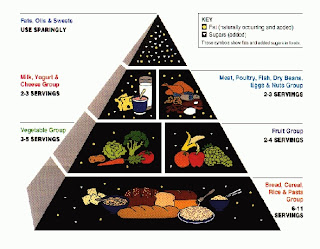
Its been a while since Ive talked about grains. Like over a year. Too long. Ive written Why You Dont Need Grains, about why you dont need grains. Duh. And Whole Grain Destruction, providing some hard science on the pitfalls of whole grains. Oh, and then there was Modern Wheat, explaining the difference between the wheat of the past and the wheat we eat today. Despite the nutritional shortcomings discussed in these articles though, most nutritionists still recommend a grain-based diet like the one depicted in this here food pyramid. Yes, its outdated, weve moved on to the Plate now. The philosophy is still the same.

As a nutrition professional, I think its important to talk to other nutrition professionals and understand their views on things, as they often differ from mine. Sometimes you learn something new from considering someone elses perspective.

I can remember one situation when I was doing my counseling internship at Student Health Services at UConn. I was shadowing a dietitian there, and a client that day mentioned that she didnt eat bread; she had heard we didnt need it in our diets to be healthy. Being the intern, I kept my mouth shut and let the counselor handle it. Of course, her advice was that we DO need bread, as it provides important vitamins and minerals. She may have had a point; ined flour products like white bread are enriched and fortified with B-vitamins (thiamin, riboflavin, and niacin), folic acid, and sometimes iron. For people who havent eaten vegetables or red meat in six months, maybe ined grain products actually serve a purpose.

So I started thinking... I wonder what it takes to get enough of these nutrients without grains?

B-Vitamins
This section will be short. If youre eating enough calories, its pretty difficult to be deficient in any of these vitamins. In fact, the only realistic way we would see a deficiency is if were getting most of our calories from ined grains that were not enriched; all of the ined grains in America are enriched. B-vitamins are found in meat, eggs, potatoes, sweet potatoes, veggies, fruits, nuts... pretty much all whole foods. I mean youd have to really be eating straight sugar or butter all day to not get enough of these. Theyre a non-issue. Next!

Folate
I say folate, not folic acid, because folate is the natural form found in food. Folic acid is the form added to foods (like grains) and used in supplements. This folate stuff is pretty darn important... its needed for several reactions involving DNA, which is the foundation for every cell in the body. Its also been found to be extra important in pregnancy; adequate folic acid levels can prevent the birth defect spina bifida.

Most of the food sources of folate are plant foods, with liver being the exception. Too bad liver is disgusting. I wish I could choke it down, I really do! Anyway, some of the best sources are greens and beans. Nice, that rhymed.

What does a full day of folate look like for a non-pregnant person? Glad you asked, here are a few examples:
  • 1/2 cup steamed spinach, 1/2 cup steamed collard greens, 1/2 cup kidney beans, 1/2 cup green peas
  • 1/2 cup lentils, 1 cup raw spinach, 1/2 cup asparagus, 1 small orange
  • 1/2 cup black beans, 1 cup steamed broccoli, 1 cup romaine lettuce, 1/2 cup Brussels sprouts
  • 6 oz. beef liver (Yuck.)
Some folate may be lost in cooking as well, depending on how long its cooked, so theres that to worry about too. 

You can get to the RDA for folate, sure. But is your average schmo doing this? No. Good thing those cheap grains are fortified with folic acid. And this doesnt even take into account a pregnant womans requirements, which are 50% higher. :-o 

Iron
This stuff.
First, its important to note that men and women have completely different iron requirements. According to the RDA, men only need 8 mg/day, while women need 18 mg/day. Premenopausal women, that is... losing all that blood every month has its consequences. After menopause, iron requirements for women drop back down to 8. Men should never have an issue getting enough iron. Women, on the other hand, have a little more trouble; girlies have a 6-10x increased risk of developing iron-deficiency anemia! (1)

The best sources of iron are animal foods. Clams, oysters, and liver are your most iron-rich foods. Red meat and poultry are second. And then weve got some random plant foods like pumpkin seeds, white beans, and lentils that sport nice iron profiles. Plant iron is less bioavailable than the animal type though, so the hard numbers are a little misleading.

The following are realistic ways to get 18 mg of iron in your day:
  • 2 cups kale, 1 cup steamed broccoli, 1 oz cashews, 1 cup edamame, 1/2 cup lentils, 1 medium baked potato, 4 oz boneless chicken breast, and 6 oz ground beef
  • 1/2 cup steamed spinach, 1/2 cup white beans, 1 oz pumpkin seeds, 1 1/2 cups roasted red potatoes, 5 oz chicken thighs, 3 oz shrimp
  • 1 cup roasted Brussels sprouts, 1/2 cup steamed Swiss chard, 1/2 cup prunes, 1/2 cup olives, 3 fried eggs, 1 oz canned clams, 6 oz sirloin steak
  • 10 oz beef liver (Okay, not realistic. Yuck.)
Thats kind of a lot of food, no?? You women have a tough life! Sure, a determined, health conscious woman would have no problem with this kind of intake, but your average American? Hell naw. Probably a good thing those junk breakfast cereals are fortified with iron.


Okay. Obviously we dont need grains in our diet. Theres nothing special in grains that we cant get elsewhere. But for the average person who doesnt give a crap about his or her diet, eats Hot Pockets and McDonalds all the time, and hasnt touched spinach since the 90s... theyre pretty important. Folic acid and iron are vital, especially for certain populations... pregnant women in the case of folate, young women in general in the case of iron.

If its nutrient density and optimal health youre after, theres no reason for you to eat grains in any significant amount. But most people arent you. If youre an average American, I say you need them. Call me crazy. 

Friday, January 31, 2014

People who exercise regularly are better at creative thinking


People who exercise regularly are better at creative thinking. This is the outcome of research by Leiden cognitive psychologist Lorenza Colato. She published an article on this subject in the scientific magazine Frontiers in Human Neuroscience.

Taking a stroll

We know that authors like Søren Kierkegaard, Henry James en Thomas Mann used to take a stroll before they sat down behind their writing desk. Apparently, this helped them to get new ideas and insights. But is it possible to prove scientifically that physical exercise makes creative thinking easier?

Divergent and convergent

To find this out, Colzato investigated whether regular exercise may promote the two main ingredients of creativity: divergent thinking and convergent thinking. Divergent thinking means to think up as many solutions as possible for a certain problem. Convergent thinking leads to one single correct solution for a given problem.

Thinking tasks

The psychologist gave thinking tasks to two groups of test persons: people who do physical exercise at least four times a week -- i.e. cycling -- and people who do not exercise on a regular basis. The first assignment was a so-called alternate uses test, in which the participants had to note down all the possible uses for a pen. This was followed by a remote associates task: the test persons were presented with three non-related words, like time, hair and stretch, and had to come up with the common link, which in this case was long.

Healthy body = sound mind

On the remote associates task, people from the group of frequent exercisers appeared to outperform those who did not exercise regularly. Colzato: We think that phsysical movement is good for the ability to think flexibly, but only if the body is used to being active. Otherwise a large part of the energy intended for creative thinking goes to the movement itself. Colzato believes that these results support the famous classical idea of a sound mind in a healthy body: Exercising on a regular basis may thus act as a cognitive enhancer promoting creativity in inexpensive and healthy ways.

Monday, December 2, 2013

British people living longer healthier says report

When historians of the future look back to the hundred years or so between the beginning of the 20th century and the beginning of the 21st century, one of the salient features of this period of time that theyre likely to marvel at is just how much the quality of peoples health changed over this time. And how it all happened despite a worldwide population boom.

To illustrate this more clearly, lets look at some figures, courtesy of the UK Parliaments "Trends in statistics since 1900" paper. Some of this stuff really is fascinating:

In 1901 baby boys were expected to live until the age of 45, while baby girls fared slightly better with an average life expectancy of 49.

In 2012? Well, lets just say things have improved dramatically - its now 78 for boys at birth and 82 for girls.

Lets bear in mind, though, that life expectancy is just a statistic, and that there were people born in 1901 who were still alive in 2001. But the averages do tell a story - while nobody can predict individual futures, as a society we started living longer and continue to increase our longevity. So my chances of living longer are better, although how long I actually do live is down partly to luck, environment, lifestyle, and other factors.

Things like individual health insurance, technological advance, enlightened attitudes towards nutrition - and also mental health - plus the availability of health and wellbeing information on the internet - all have their part to play as well.

Another thing to think about when looking at longevity statistics is that, again, theyre really just a number interms of what they say about the quality of life that people have. So, the 1901 figure of 45 for men may seem very low now - but on top of that even those who did outlive that number for some years may well have had one of the diseases that were widespread at the time.

Recently it was found that the healthy life expectancy of people in England has increased. This is the period of our older years where we expect to be free of ailments. The figure for Scotland is down slightly, however -believed to be in part due to higher rates of smoking and other lifestyle factors.

Wednesday, November 20, 2013

11 Patients With This Disease Lead People To Be Grumpy

When there are angry people, the disease is often associated with hypertension or high blood pressure. Yet hypertension does not always make people so angry, in fact there are other health problems are more likely to influence temperament.

Some of the diseases that may increase the aggressiveness either because the treatment process as well as the effects of the disease itself are as follows.

1. Hyperthyroidism
An estimated 1 in 100 women who have overactive thyroid or hyperthyroidism also experience mood changes or mood. Increased heart rate and body temperature due to excess production of thyroid yan makes people more irritable.

2. Excess cholesterol

Approximately 7 million people with hypercholesterolemia or excess cholesterol in the UK became more grumpy when taking statins, a type of controller medication cholesterol. Experts suspect, cholesterol dropped suddenly makes the production of serotonin or happy hormones involved reduced.

3. Diabetes

Hypoglycemia or blood sugar levels to drop below normal are often experienced by people with diabetes or diabetes, both type 1 and 2. Reduced sugar levels affect brain function, which one effect is an increase in temper, anger, confusion, and panic attacks.

4. Depression
This psychiatric disorder causes the production of serotonin, a hormone that triggers the pleasure is reduced. The effect can be quite varied, ranging from the leg can not be silent, insomnia and also includes a grumpy without any apparent reason.

5. Alzheimers

Someone particularly the elderly who have started to develop Alzheimers dementia because it usually become more sensitive and irritable. Changes in brain structure, especially in the frontal lobe causes emotions more difficult to control than when I was young.

6. Swelling of the liver
The term or phrase heartened is often defined as a patient nature, but a big heart swelling due to cirrhosis or very far from the trait. According to the study, cirrhosis of the liver can lead to a condition called hepatic enselopati and can change personality.

7. Epilepsy

People with epilepsy can suddenly get angry after having a seizure. It is believed, symptoms can last up to several hours or even days it happens because the neural circuitry in the brain to crash during a seizure.

8. PMS (Pre Menstrual Syndrome)
Its not unusual if in one day in every month a woman be more sensitive, irritable or angry. It is not known exactly what causes it, but it often occurs before menstruation.

9. Insomnia

To treat insomnia or trouble sleeping, doctors often prescribe benzodiasepine which is also an anxiety medication. One side effect is a decline in brain function, which make up about 1 percent of patients became more aggressive.

10. Wilson Disease
Genetic disorder that affects 1 out of 30,000 people this causes heavy metal accumulation in the brain and liver. Stacking too much can cause damage in the brain, one of the commonly reported trigger personality changes to be more grumpy.

11. Stroke

Brain damage is very common after a stroke. If such damage occurs in the frontal lobe, the ability to control the sense of empathy, emotion and aggression can be greatly reduced.

Sunday, October 20, 2013

Difficult For Obese People To Lose Weight

The strongest desire of people suffering from obesity is to lose weight. But unfortunately most of them have always failed. It turned out an important cell has been discovered which plays an important role in weight loss.
 
A study in Dublin, Ireland have discovered immune cell invariant Natural Killer T (iNKT) helps to regulate body weight and metabolism. However, iNKT cells will be lost if people are obese. Thats why people who are obese is difficult to lose weight
 

Obviously if finally lost weight cells will be replenished. Having conducted an operation in the group of patients who are obese, iNKT cell recharge. So basically there only iNKT cells to maintain weight loss, weight gain time, they lost.

Lucky, the team also found lipid called alpha-galactosylceramide (AGC) which helps the metabolism, weight loss, and liver disease. However, diet and exercise may be the best way.

When studying a group of mice, the researchers found by maintaining a normal diet, the mice were obese can lose weight by recharging the immune cells that fight obesity.


Same with human subjects in the first time to learn, iNKT cells in the animals disappear when they become obese.

When you take this diet and incorporate a standard fat diet, they lose weight, and increased iNKT cells. It is not easy but it may be done

Saturday, October 5, 2013

Drugs Kill 250 Thousand People in the World Each Year

Health for human | Apparently there are more than 200 million people worldwide who use illegal drugs or drugs every year. And according to recent reports, drug caused 250 thousand deaths per year, most occur in developing countries.

The true number of illegal drug users may be higher than estimated in the report, because the method used to measure the prevalence of drug use, such as household and school surveys, can not be resolved by drug users or people may not admit to drug use.

Researchers using information from the UN Office on Drugs and Crime and other published literature, estimates that there are about 149 million to 271 million people worldwide use illicit drugs.

Most of the cannabis users (125 to 203 million), followed by amphetamine users (14 to 56 million), cocaine users (14 to 21 million) and opioid users (12 to 21 million).

Cannabis users highest in Oceania (Australia and New Zealand), with up to 15 percent of the population aged 15 to 64 years who use drugs. Oceania also has the highest amphetamine, with 2.8 percent of age group who use illegal drugs.

The use of opioids, including heroin use, the highest in the Near and Middle East (up 1.4 per cent of the age group 15 to 64 years), whereas the highest cocaine use in North America (1.9 percent).

There are 4 types of hazards that occur from the use of drugs, namely:

  1. Toxic effects of drugs, as seen in overdose.
  2. Intoxication effects, such as injuries due to accidents and violence.
  3. The development of addiction.
  4. Adverse health effects of chronic continuous use, such as physical illness, brain damage, HIV / AIDS and hepatitis, as well as contributing to disability.

Monday, September 16, 2013

1 2 Million People in England Could Try to Quit Smoking

"As many as 1.2 million people in England could try to quit smoking in the New Year, figures suggest."


Cancer Research UK analysis of smoking trends since 2006 found January was the most popular month to quit, with an average of one in eight smokers trying.

The charity also said those who tried in January tended to be more successful than those trying in other months.

Try to Quit SmokingThe NHS is launching a campaign to raise awareness of the free support methods available to help smokers quit. In the New Year a series of "Getting Off Cigarettes" adverts will highlight the range of free stop-smoking support provided by the NHS. The last available figures showed around 24% of adults in England smoked.

With willpower alone, the chances of success are very small Professor Robert West The NHS Information Centre reported in September that more people had quit smoking in the first three months of 2007 than in any other quarter in anticipation of the smoking ban that came into force in the summer. Professor Robert West, director of tobacco studies at the Cancer Research UK Health Behaviour Unit, calculated that 13% of smokers tried to quit in January 2007 - the equivalent of every adult in Newcastle, Manchester, Coventry and Bristol. By monitoring trends in quit rates, he also found that those who chose to quit as their New Years resolution did better than those who quit at other times of the year.

Success
He said: "We have found that almost half of all smokers actually try to quit at least once over the course of the year and one in eight try to quit in January. "But I was particularly interested to find that, contrary to popular scepticism of New Years Resolutions, smokers who quit in January also tended to be more successful at staying off cigarettes." He said that many people did not know about the free support that was available to them on the NHS or were put off because they did not know what the services were offering.

"Its not like alcoholics anonymous, its just practical advice," he said.

"With willpower alone, the chances of success are very small.

"The first thing is to get the right medication, whether thats nicotine replacement, zyban or champix, and the really important thing is having it explained exactly how to use it and to make sure you use enough of it."

Contrary to the NHS Information Centre report, his figures suggest that although people intended to quit because of the smoking ban, the actual number of people smoking has not yet changed.

"What we saw in Ireland was it took a few months for the effects to take hold."

Article Source : 1.2 Million People in England Could Try to Quit Smoking